
Safety to make mistakes
A child who is afraid of getting it wrong stops trying anything difficult. Room to fail is what makes room to grow.
For parents, carers and grassroots coaches
You do not need to have all the answers. Sometimes the greatest support begins with listening, staying calm and helping a young athlete remember that their worth is bigger than any result.
Written by a football parent, from the touchline and the car journey home.
Most of us mean well. We ask a question in the car because we are interested, because we care, because we want our children to do well. But a child sitting in the back seat, still full of adrenaline, sometimes hears something we never meant to say. The good news is that very small changes in our words can change the whole journey home.
“Did you score?”
“What did you enjoy most today?”
“You need to try harder.”
“I saw how hard you kept going.”
“Why didn’t you pass?”
“What was happening for you in that moment?”
These are not rules, and there is no perfect script. They are simply gentler options worth keeping in your pocket.
A gentle observation
Almost every sentence we say on the touchline comes from belief. We say them because we can see what our children are capable of, and because we want them to see it too. Children, though, listen with different ears. They are still working out what makes them valuable, and they take their cues from us.
It does not mean you are a bad parent or coach. It means that children can hear more in our words than we realise.
None of these things depend on talent, league position or the final score. All of them come from the adults standing nearby.
A child who is afraid of getting it wrong stops trying anything difficult. Room to fail is what makes room to grow.
The result is not always in their control. The effort always is. Naming it tells them which part actually matters.
Children often need a few quiet minutes before they can explain what happened. Silence in the car is not always a bad sign.
Encouragement lifts a child. Expectation sits on their shoulders. The words can sound similar and feel completely different.
Children grow at their own speed, on and off the pitch. A quiet season is not a wasted one.
If joy only arrives with a win, most weekends will feel flat. Protecting the fun protects the whole journey.
For parents, carers and coaches
Nothing here asks you to be a perfect parent or a perfect coach. There is no such thing, and children do not need one. What they notice is far simpler: whether the adult beside them is a safe place to land.
Support is not about removing every difficult moment. It is about making sure a child does not face those moments alone.
For players
If you play, this part is for you. Not for your coach, not for your parents. You.
You are more than one match.
A mistake does not define you.
Feeling nervous does not mean you are weak.
Progress can be slow and still be real.
You are allowed to enjoy the game.
Asking for help is a sign of strength.
Rest counts too. Tired legs and a tired head both need a day off sometimes.
Resources
A short summary of the ten areas explored in the parent guide. None of them require a new personality — only a slightly different sentence.
Ask what they tried, not what they scored. Effort belongs to the child; the scoreline rarely does.
Give them the first word after a match. Advice lands far better once they have finished speaking.
Swap “you must” for “you can try”. It keeps the standard and removes the weight.
Ask yourself whose dream a decision serves. Their path does not have to repeat or repair your own.
“Good game” fades quickly. “You kept your head up after that mistake” stays.
Nerves are normal, not a fault. Simple habits — three slow breaths, one small goal — make them lighter.
Ask who they helped and who helped them. It widens the meaning of a good performance.
Keep some football with no score at all. Laughter in the garden is still training.
Children grow in uneven steps. A flat month is usually a pause, not a decline.
How we speak about referees, opponents and coaches becomes how our children speak about them.
The parent guide
The Essential Guide for Football Parents
This book was written by a football parent, after watching his own sons fall in love with the game — and after realising how easily an ordinary question in the car could take some of that love away.
Inside you will find honest stories from real Saturday mornings, reflections on what went wrong and what changed, and practical ideas you can use on the way home from the very next match. It is not written by an expert, and it does not pretend to be. It is one parent’s experience, shared openly so that other parents, carers and coaches can take what is useful.
This is not a book about tactics or training plans. It is about the moments before the match, beside the pitch and on the journey home.
The children’s colouring book
A playful world where football, dogs and creativity come together.
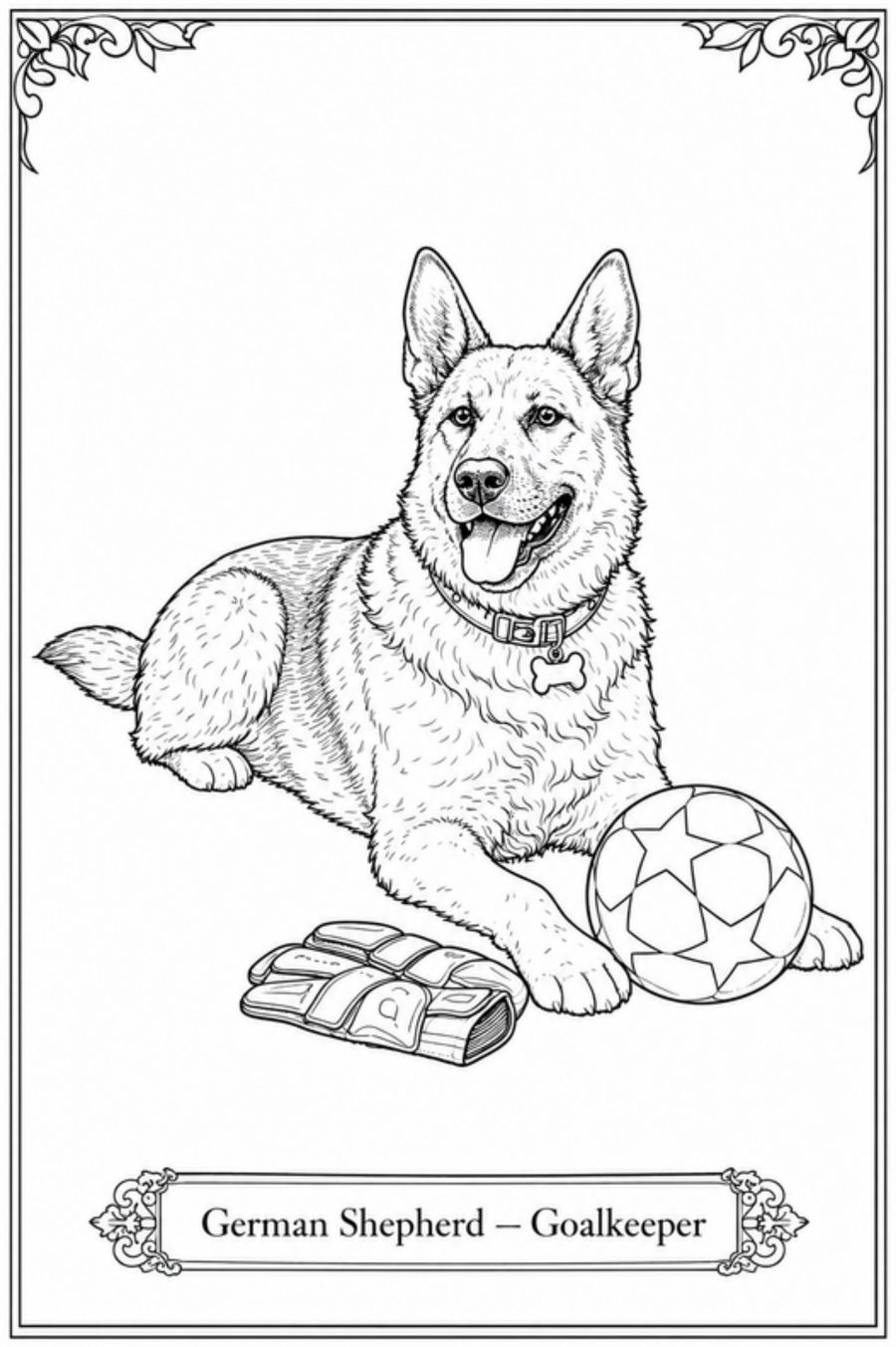
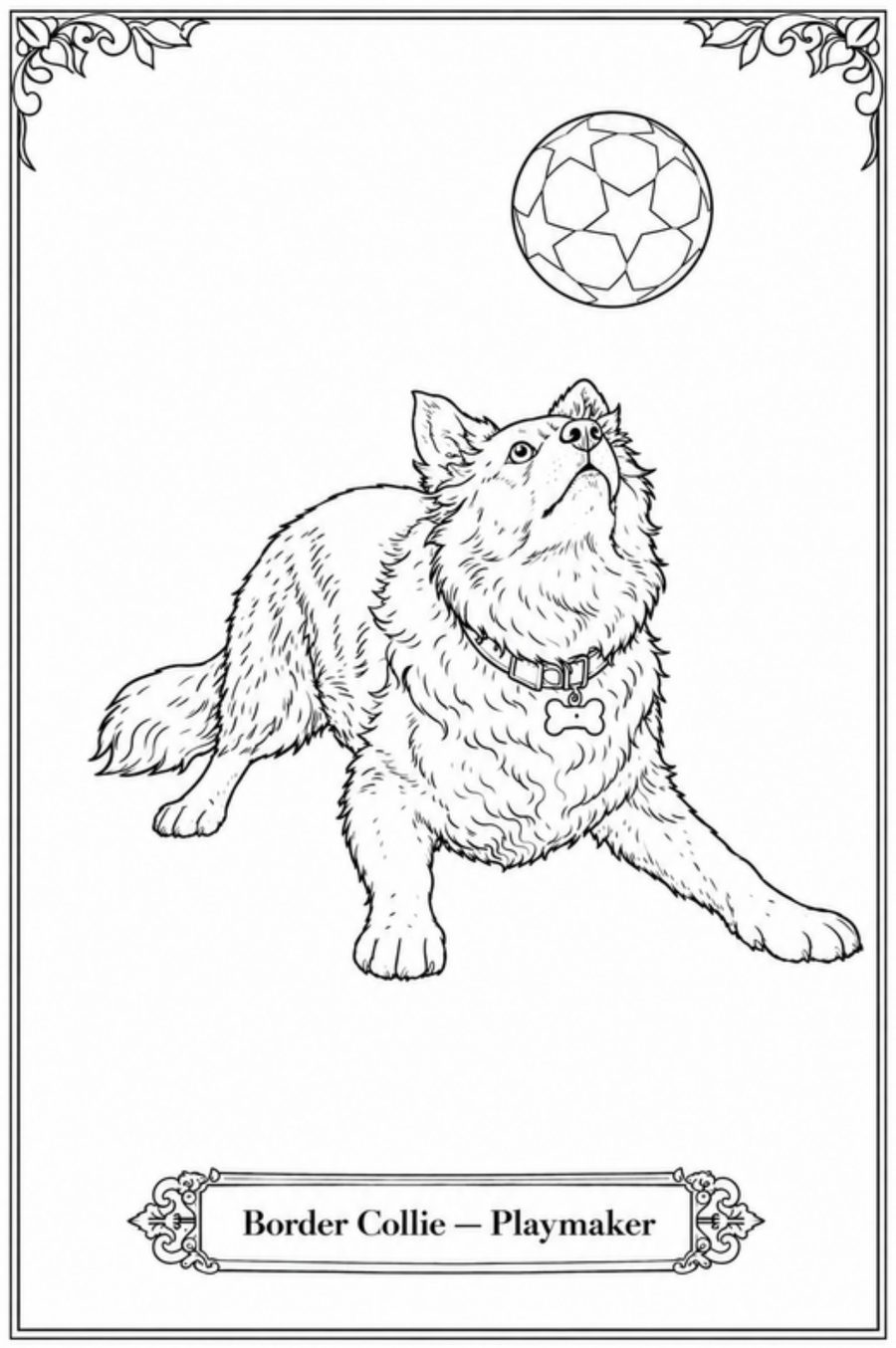
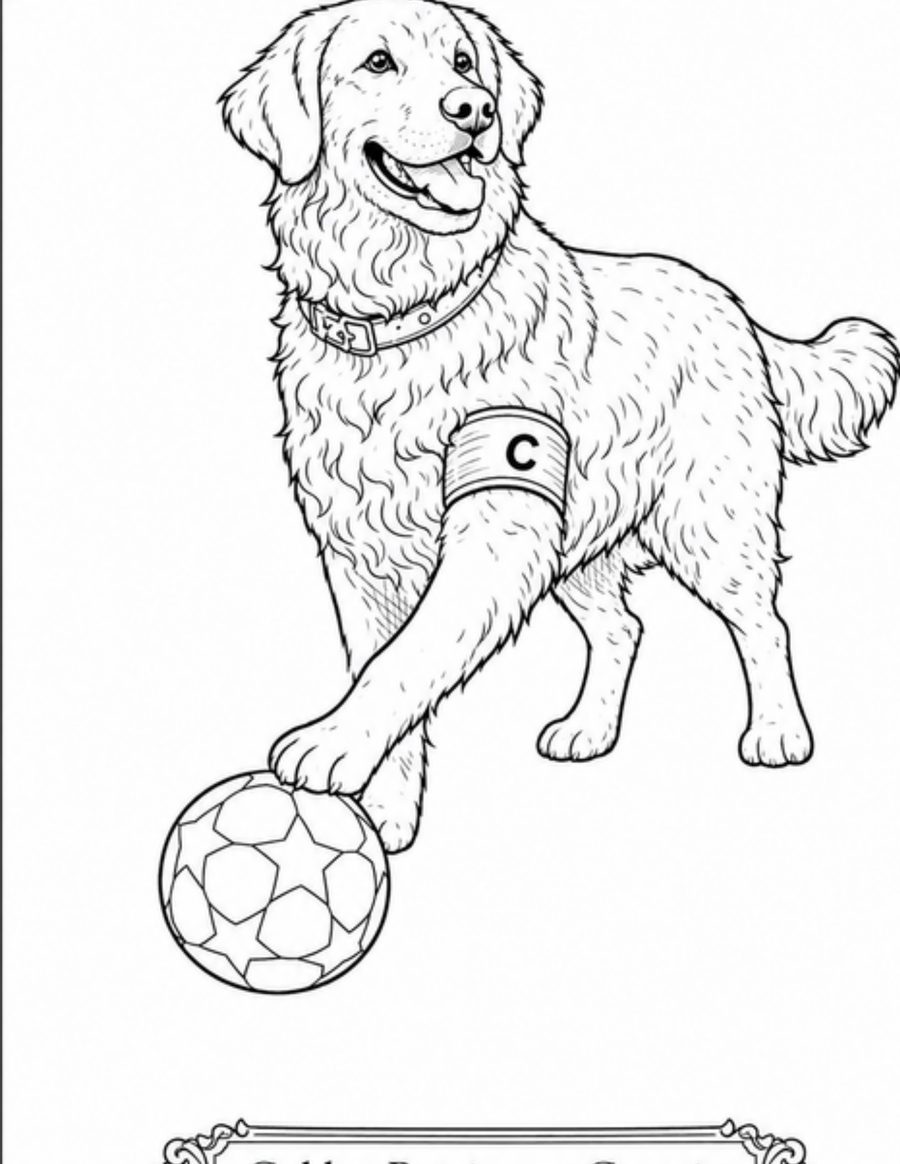
Every page introduces a different dog in a football role: a Golden Retriever wearing the captain’s armband, a German Shepherd in goal, a Border Collie reading the game, a Greyhound running in behind. The drawings are detailed enough to hold a child’s attention and simple enough to enjoy.
It makes a calm activity after training, something to take on a long journey, or a quiet way to spend a rainy afternoon at home. Nothing more complicated than pencils, a table and a bit of time.
A moment after the final whistle
The referee blows. The game is over.
A child walks off the pitch with mud on their socks and their shirt untucked, scanning the touchline for one particular face. In those few seconds they are not thinking about the result. They are trying to work out what they are about to walk into.
Will there be a sigh? A raised eyebrow? A quick piece of advice before they have even taken their shin pads off? Or will there be someone who is simply glad to see them?
Whatever comes first sets the tone for the whole journey home — the car, the kitchen, bedtime. It is a very small window, and it carries a surprising amount of weight.
Sometimes the most powerful words are simply: I loved watching you play.
About
Be My Power grew from ordinary moments in youth football: conversations in the car, emotions after matches, excitement, disappointment and the realisation that adult words can either add pressure or become a source of strength.
It began with one parent watching his own sons from the touchline — noticing how much courage the game asked of them, and how easily a well-meaning comment could take some of that courage away. The books, and this website, are an attempt to share what those Saturday mornings taught him.
The name says what the brand is for. Children do not need us to be their coach, their critic or their agent. Most of the time they just need us to be their power — the steady thing behind them when the game gets hard.
No. Football is where these ideas came from, but the same thinking applies to swimming, athletics, rugby, gymnastics and almost any sport a child takes part in. If you stand on the side of a pitch, a pool or a track, you will find something useful here.
No. Be My Power shares educational and reflective content written from a parent’s own experience. It does not diagnose anything and it does not replace professional medical, psychological or safeguarding support. If you are worried about a child’s wellbeing, please speak to your GP or another qualified professional.
It is written for parents and carers of children who play football, and it is just as useful for grassroots coaches, club volunteers and anyone else who talks to a young player after a match.
The drawings are detailed line illustrations of dogs in football roles. Most children of primary school age enjoy them, and older children and adults who like detailed colouring do too. Younger children may prefer to work on a page alongside an adult.
Yes. Coaches often shape how a child feels about the game just as much as parents do. The reflections on effort, listening and pressure translate directly to the training ground and the team talk.
Both titles are available on Amazon. You will find direct links in the book sections of this page and in the footer.
Yes, we are working on more. The simplest way to hear about new material is to join the mailing list.